The B.C. Ministry of Transportation and Infrastructure has increased its Commercial Vehicle Safety and Enforcement (CVSE) patrols with an emphasis on enforcing height restrictions in response to a spate of commercial vehicles colliding with overpasses.
The province says in the past 12 months there have been at least seven incidents of trucks carrying overheight loads striking overhead bridges, according to news reports. Since June, there have been at least four incidents in which commercial trucks carrying oversized loads have hit overpasses along B.C. highways.
In early June, a truck collided with the Cambie Road overpass in Richmond, causing part of Hwy. 99 to shut down. A couple of weeks later, a dump truck towing an excavator hit the 232nd overpass on Hwy. 1 in Langley.
And then, a flatbed truck hauling an excavator caused significant damage to the 192nd overpass on Hwy. 1 in Surrey, sending two people to hospital.
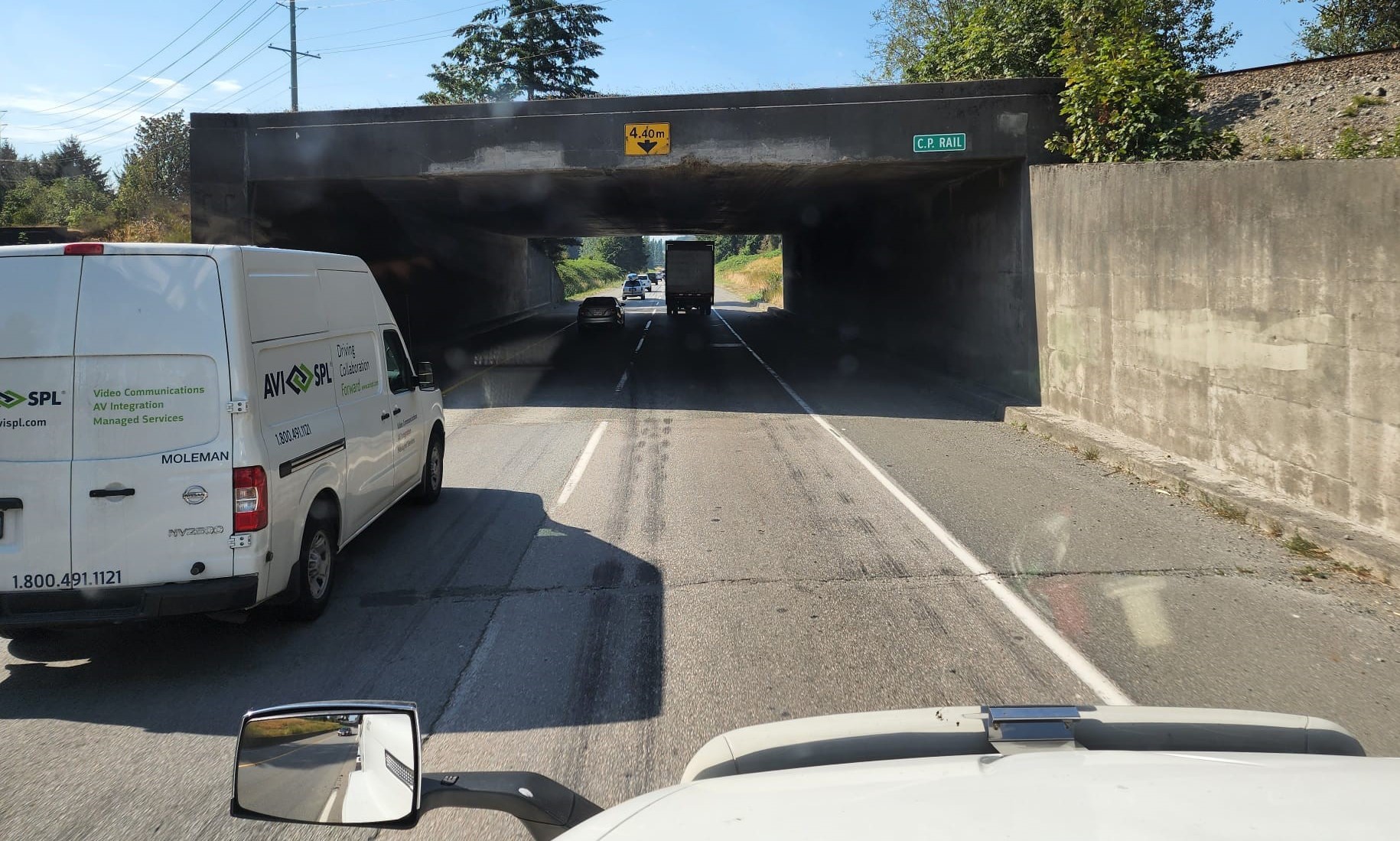
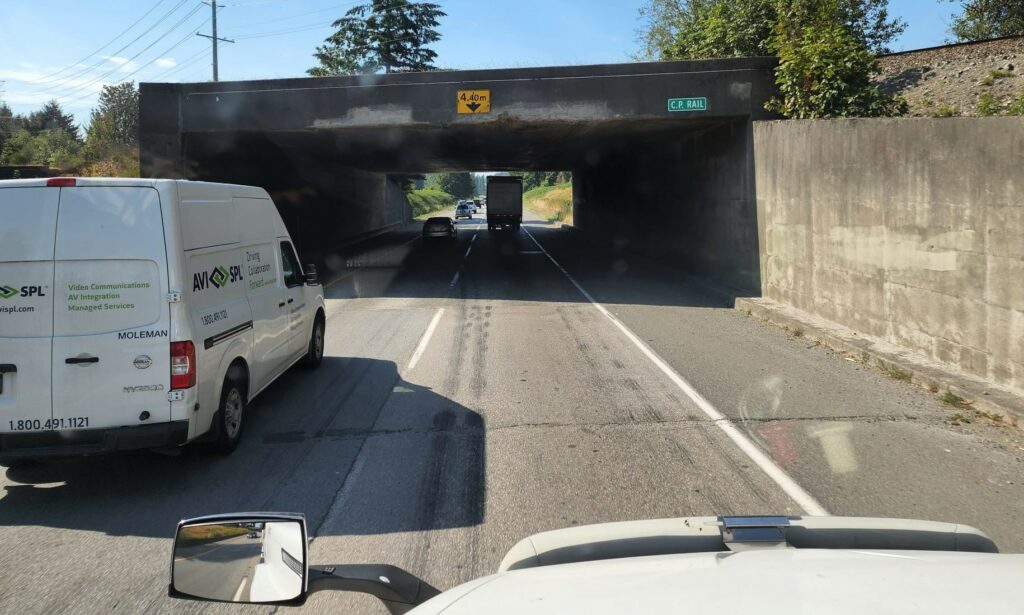
In the latest incident that occurred last month, a cherry-picker truck crashed into the Glover Road overpass of Hwy. 1 in Langley. The bridge has a sign listing its lowest height as 4.46 meters.
Permits required
Commercial vehicle drivers require permits to carry overheight and oversized loads, says Brennan Clarke, senior public affairs officer, Ministry of Transportation and Infrastructure.
Commercial vehicle operators are responsible to ensure their loads are meeting the terms and conditions of the permit they have been issued and that they follow the route prescribed by the Provincial Permit Centre. Drivers of overheight and oversized vehicles are not permitted to select their own routes, Clarke says.
Any time there is a series of such events it tells us we have a systemic problem, but this is not new, says Dave Earle, president and CEO of the British Columbia Trucking Association (BCTA).
Hundreds of oversize moves happen every day in B.C. safely and while only very few hit infrastructure, it can be a learning experience. “Did the carrier pull a permit? Did the driver correctly plan the route? Was the load measured incorrectly? Or did no one involved bother to care and just decided to ignore the law?” asks Earle.
Road resurfacing suggestion
Contractors could dig deeper under overpasses while resurfacing the road, thus increasing the height for trucks, suggests Harmeet Singh Nijher, treasurer, West Coast Trucking Association, a group of professional drivers in the province. He added dry vans make it through some of the low infrastructure with little room to spare.
Truckers who normally haul regular size loads and pick up overheight loads occasionally, should be attentive to ensure safety on the road, says Amrit Grewal, owner and instructor, Sarabha Driving School in Langley. He emphasizes the importance of route planning to his students.
The BCTA is frustrated with the collisions. It claims most of the recent incidents involved people moving their own equipment and there was no for-hire carrier involved. Only one of the recent hits involved a “minor” impact, the rest were direct impacts. “They were not close calls. Measure your load, plan your route,” says Earle.
He added that the ministry must share information from its investigations so that the public can be confident regulators are addressing the issue.
Name and shame
The ministry is currently looking into how best to publicly share information about other types of commercial vehicle incidents, Clarke said.
The ministry has published a list of B.C. carriers who have been cancelled for cause, including serious safety violations. This measure was introduced to support increased transparency about enforcement actions taken by the CVSE against unsafe carriers and offers greater accountability for carriers regarding the safety of roads and drivers in the province.
The ministry has a minimum height standard of five meters that it uses in building all new infrastructure, Clarke noted.